
Innovations: An Integral Part of a Muslim’s Life
By: Faysal Burhan
Published: 2014
 A Video Presenting Innovations: An Integral Part of a Muslim’s Life
Why Innovation
Inventions are an integral part of human existence and, therefore, of Islam. Actively providing solutions is the answer to Allah’s commands and Islam’s teachings. Allah SWT states in 38:29:
[Here is] a Book which We have sent down upon you, ‘li Ytadabarou’ to reflect upon its many blessings, signs, and passages [to genuinely think through its theories, investigate and discover its predictions, expressions, concepts, and matters to bring about newer information and solutions that are fit for the moment], and that men of understanding may receive admonition. Qur’an 38:29
The Qur’anic linguist expert, Dr. Abd-al-Wahid Wajeeh, explains:
‘Yatadabarou’ is the deepest level of research and investigation, aimed at bringing about new concepts and timely solutions.
The Holy Qur’an contains expressions and inspirations appropriate for every time and circumstance. These expressions can be realized and utilized only by the timely and purposeful study of its verses. Hence, Muslims must invent and produce new solutions or systems that meet all people’s ever-changing lifestyles, technology, and social and political environments.
There is no running away from novelties so long as the vehicle of Islam moves forward and human life continues its progression toward civilization and modernization. Along with improvements, developments, and advances come problems and obstacles. Confronting these obstacles may call for even more creativity. The Prophet Muhammad, his Companions, and the Tabi’een, those who came after the Companions, demonstrate this principle by creating new sciences and institutions of learning, satisfying the demand and circumstances. Examples of such innovations are made in this writing. It is puzzling to the mind why such a topic of originality and centrality should even become controversial to some people at all. See below the “Discussion on the Controversial Innovation (Bid’ah) in Islam” section.
Engaging Muslims’ Intellect
Muslims must not shut down their intellects based on concern or fatwa rejecting novelty. Muslims must step out of the box of “I cannot do anything because of a fatwa or perception; because God will take care of it; because it does not pertain to me, and the list of do nothing and lie back goes on and on and on.” Allah SWT opened the ways for Muslims to learn, engage, and lead the way to prosperity, not laziness. He described the believers saying:
They believe in God and the Last Day, enjoin what is right and forbid what is wrong, and zealously strive to excel (compete) in good works: These are righteous (augmenting the human potential). Qur’an 3:114
To zealously compete with someone, competitors must present an invention, product, idea, or plan of action. How can we be “competitors” augmenting human potential by being passive without intuitiveness? Shutting off minds and hearts and producing no actions or answers violates God’s commands and invites failure.
Not all the solutions devised by the Prophet Muhammad for the 7th-century inhabitants of Arabia work for people living in the fast-paced, technologically advanced world of the 21st century or anywhere else on this globe. Neither are the fatwas issued in past centuries necessarily suitable. These fatwas could serve their time and place well, but can be useless or ill-suited to the industry, economy, and ever-changing sociopolitical landscape.
The Creation of Specialized Institutions
Today’s Muslim decline in just about all walks of life imposes on them the creation of research institutions dedicated to studying their decline and producing approaches and plans to get them out of their abysmal failures. Establishing specialized research institutions, in association with the existing colleges and universities, think tanks, and other research enterprises, is a must for today’s impaired Muslim Ummah.
Muslim schools, Islamic centers, and academic institutions should offer courses in tarbiyah (education, orientation, and training) in the spiritualities of Islam. Spiritualities include taqwa, humbleness (kushu’), and thikru-Allah (intensified contemplation sessions and remembering Allah, His attributes, the Universe, the worlds and Heavens, and many more of His signs and creations). These institutions should offer higher degrees in “Inner-Self Purification (Tazkiyah).” Muslim educational systems should institutionalize the Prophet’s teaching on al-Hikmah (Wisdom).
Education courses should include the Prophet’s management schemes of his affairs: How did he unite his people? How did he change minds and hearts, eradicate tyranny and violence, and establish peace, security, justice, and civility? Education should implant in the minds of students the Sunnah of planning, Itqan, the work with precision and artistry, the Sunnah of Careful Considerations, and many more of his astute, administrative, and managerial Sunnan.
Discussion on the Controversial Innovation (Bid’ah) in Islam
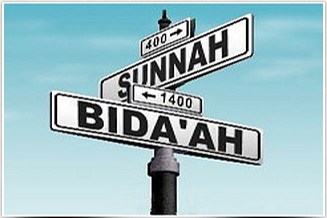
The controversial topic of innovation in Islam is one of the more important topics to explore. The correct understanding of bid’ah should remove much ambiguity and tensions among Muslims and ease the way for Muslims to progress. The author recommends studying this topic in every Islamic institution, home, and business.
This writing is greatly influenced by Dr. Adnan Ibrahim’s presentation on bid’ah on the television program Aafaaq, broadcast by Rotana satellite from Egypt in July 2014.
The Linguistic Meaning of Bid’ah
The Arabic word bid’ah came from the root word Ibdaa’, meaning to create something from nothing without an earlier occurrence or presence. Example: Allah is badi’u, the first to develop or to initiate the Heavens and the Earth.
The Prophetic Traditions of Innovation
Much of the discussion in this article centered on the Prophetic Traditions listed below and on Qur’anic verses supporting an argument or position on the topic.
Every innovation is bid’ah, a new creation; every bid’ah is deviance, and each deviance is in the [Hell] Fire. -Muslim
Whoever, Sanna Sunnatan Hashanah, initiates a good practice in Islam, and others do likewise after him, there will be written for him its reward and the like reward of all those who follow him, without decreasing the least from their reward. And whoever starts a bad practice in Islam will bear the burden of his bad practice, and the burden of all who likewise follow him, without decreasing in the least from their burden. -Muslim and Al Temithi
Keep on my Sunnah and the Sunnah of the rightly guided Caliphs; cling to it willfully [literally, with your molar teeth.] -Abu Dawood and Termisi, Hadith Hasan Sahih
Follow the two after me, Abu Bakr and Omar. -Sunan Altermithi and Ibn Sa’d
Scholars’ Deliberation on Bid’ah
Traditional Muslim scholars deliberated on bid’ah (innovation) differently. Many accepted bid’ah and classified it into categories of good and bad, while others ultimately rejected it. Several of the scholars’ definitions and arguments on bid’ah are presented so the readers can judge the correct answer to bid’ah.
The Scholars Sided with Innovation
Al-Izz ibn Abd al-Salam (1181-1262)
A more elaborate explanation of bid’ah was made by the Shafi’i great scholar al-Izz ibn Abd al-Salam, known as the sultan of scholars. In his book, “Qawa’id al-Ahkam, The Basis of Religious Rulings,” he explained bid’ah as “the creation of an action that was not known during the lifetime of the Prophet Muhammad,” peace be upon him, pbuh, and then he divided innovation into five categories:
1- Prohibited Bid’ah. This category applies strictly to the Muslim system of Aqeedah or belief. An example of this type of bid’ah is to describe Allah SWT in a physical shape, form, or volume.
2- Undesired or Unwanted Bid’ah. An example of this type of bid’ah is the decoration of Mosques and Qur’ans.
3- Permitted Bid’ah. This category applies to innovations in food making, communications, and transportation. Al-Izz considers this category to be permissible innovations.
4- Desired Bid’ah. This category of innovations may include every religious enterprise that was not known during the lifetime of the Prophet, such as Islamic schools and institutions, faith establishments such as the congregational Taraweeh Prayer during the month of Ramadan, initiated by the Second Caliph Omar (630-632), and the detailed training and discipline of Sufism (675) as described in the sciences of Psychology and Philosophy.
5- Obligatory Bid’ah. Al-Izz considers this category of innovations a must. Otherwise, it is sinful if nothing is done about it. The Obligatory requirement will be reduced to a Limited Obligatory (Fardh Kifayah) if the offensive or harmful condition is treated. The Obligatory Bid’ah category applies to an imposed circumstance or deteriorating condition demanding correction or solution. What follows are a few historical examples.
Sahih Bukhari and Imam Malik, in their “Mawtta’” reported that the Prophet, pbuh, had led the people for three consecutive nights during Ramadan, but on the fourth night, he did not. Instead, he prayed at home. When he was asked why he did not pray in the Mosque? He replied, “So the people do not think these prayers are mandatory.”
During his Caliphate, Omar ibn al-Khattab (634-644) did not like people praying individually or in small groups in the Mosque. So, he appointed Ubaii ibn Ka’bb to lead individuals and small groups in a single collective prayer known as Taraweeh. The same sources continued to state that the day after he made his order, Caliph Omar entered the Mosque, and upon seeing the Muslims congregating beautifully in Taraweeh, he pleasantly expressed: “What a great bid’ah this is, but that which you sleep on it is even better [in rewards] than this one.”Signifying the prayer at the end of the night, known as Tahajud. Thus, Omar ibn al-Khattab, pbuh, deliberately changed Taraweeh as we know it today and encouraged Muslims to follow.
Some issues arose a few years after the death of the Prophet, necessitating the preservation of the sacred knowledge of the Qur’an and the Hadith. The changes were prompted by the new masses of non-Arabs entering Islam from the conquered lands and the decline in the quality of faith (iman) in the hearts of the believers. In response to these needs, new institutions and enterprises were deliberately created. Some of these establishments were:
• The compilation of the verses of the Qur’an and collating them into a single volume (632-634).
• The establishment of the dotting and punctuation systems of the letters and words of the Qur’an (688-746).
• The creation of Arabic Grammar (760-796).
• The founding of the Basis of the Science of Hadith, Traditions of the Prophet (604-890).
• The founding of the Basis of the Science of Aqeedah, the Muslim’s fundamental belief (767-855).
• The founding of the Basis of the Science of Fiqh, the details and mechanics of how and what to do as the Qur’an and Sunnah recommended. Hanafi, Hanbali, Shafi’i, and Maliki Schools of Fiqh (767-855).
• The founding of Sufism, a school of spiritual and moral tarbiyah. Tarbiyah is an institutional form of education that provides discipline and training under qualified mentors. Sufism is an institution of tarbiyah to love and draw closer to Allah and His Prophet, to instill taqwa and awareness of Allah and His Attributes, and to make the Muslim an ethically healthier human being.
Al-Izz ibn Abd al-Salam’s Bid’ah Definition Adoption by Other Scholars
Many traditional scholars adopted al-Izz’s bid’ah classification in their works. Some of these scholars were: al-Shahab al-Qarafi (1228-1258), a Maliki Jurist. Al-Iman al-Nawawi (1233-1277) in his work, “Tahtheeb al-Asma’ wa al-Lughat”. Al-Imam al-Zurqani (1645-1710), a Maliki scholar, and Muhammad Abdeen (1198-1252), a Hanafi jurist, known for his great work “Hashiyat ibn Abdeen, or Rad al-Mukhtar ala ad-Dur al-Mukhtar.”
Al-Tabari (838-923),
Al-Tabari, in his “Tabari Commentary of the Holy Qur’an,” addressed Muslims, saying: “You invented the Taraweeh (praying the night prayers in the Mosque during the month of Ramadan), yet it was not prescribed for you. You must continue to honor it because some of the sons of Israel made innovations that were not prescribed for them by Allah but later abandoned them. Allah, therefore, lectured them about it.”And then he read the verses of Chapter Hadeed, 57:52.
Imam Shafi’i (767-820)
Imam al-Bayhaqi (944-1068), who wrote in the biography of Imam Shafi’i, the founder of the Shafi’i school of thought, stated Imam Shafi’i’s bid’ah definition as: “The innovations are two kinds: The first is an innovation that contradicts the Qur’an, Sunnah, Ijma’, and other agreed-upon verdicts. This is an undesired bid’ah or rejected. The second is that which does not contradict the Qur’an, Sunnah, Ijma’, and other agreed-upon verdicts. This is an acceptable or admitted innovation.”
Al-Hafith Ibn Rajab al-Hanbali (1358-1417)
Al -Hafith ibn Rajab, a Hanbali school of thought Jurist, in his book, “Jami’ al-Ulum wa al-Hikam, the Collective of Knowledge and Wisdom,” defined bid’ah as: “Anything made that has no basis in the Shar’ (Islamic doctrine).” This definition is more specific than al-Izz’s, according to Dr. Ibrahim. Note: “The Collective of Knowledge and Wisdom” is the commentary on the “40 Nawawi Hadith” book.
Al-Hafith Ibn Hajar al-Asaqalani (1372-1449)
The scholar Ibn Hajar al-Asaqalani, who wrote “Fath al-Bari, Grant of the Creator,” an excellent commentary work on Sahih al-Bukhari, defined bid’ah in the same manner as Ibn Rajab al-Hanbali’s definition above.
Imam Abu Shamah al-Maqdisi (d. 1267)
Imam Abu Shamah al-Maqdisi, the teacher of Imam Nawawi, defined bid’ah as falling into two categories: accepted and rejected.
Imam Abu Ishaq al-Shatibi (d. 1388)
Imam Abu Ishaq al-Shatibi, a Maliki scholar, in his two-volume book “I’tissam” (The Study of Fiqh of Bida’), gave much broader elaborations and discussions on bid’ah deserving much gratitude. He gave bid’ah two basic definitions:
1- Narrow: Bid’ah is a method created in the Sharia Law to improve Ibadah or worship.
2- Broad: Bid’ah is a method created in the Sharia Law designed to implement the intents of the Sharia Law.
Shihabu ad-Deen Abu Shamah al-Dimashqi (1202-1267)
Abu Shamah al-Dimashqi, the author of “Ibn Assakir” and “Al Ba’ith ala al-bida’ wa al-Hawadith, The Trigger Against Bida’ and Incidents,” divides bid’ah into two kinds: Denied and Accepted.
Innovations Made by the Companions of the Prophet During His Lifetime
During the lifetime of the Prophet, pbuh, many of his companions made suggestions and new creations or inventions that the Prophet acknowledged and accepted. Innovations such as the athan, the Muslim call to prayer, which was a dream, and the pulpit have become integral parts of Islamic practice. On this matter, Dr. Ibrahim elaborated, saying that if innovations were not permissible by the Prophet and that if he had not accepted them, his companions would not even dare to say or attempt any innovation. Following are some other examples of the companions’ innovations, some of which the Prophet approved, yet others he disapproved of:
A- Make Up the Missing Portions of the Prayer After Joining the Imam
One of the best innovations in Islam, during the time of the Prophet pbuh, was made by Mu’ath ibn Jabal. He established the mechanism for how a person makes up the part of the prayer they missed when they join the Imam (prayer leader). Mu’ath ibn Jabal stated:
If one joins the Imam, they must continue with the Imam until he finishes the prayer, then make up the units or parts they missed due to joining late.
Dr. Ibrahim says: ‘Before this innovation, the Muslims used to do what they thought they had missed out on in the prayer immediately after joining the Imam, on their own, and then continue with him until he finishes.’ One can see some people prostrating, others bending, and others following the Imam. When the Prophet was told about it, he was pleased and said,
Mu’ath has made Sunnah for you; follow it. Sunan Abi Dawoud
This Hadith asserts that the Prophet pbuh did not stop Mu’ath from making an innovation; rather, it shows that he endorsed it. All Muslims have undeniably been performing Mu’ath’s Sunnah ever since its inception.
B- The Sunnah of Praying Two Rakh’ah (prayer unit) of Captives
Before his crucifixion, Khubabe ibn Uddai requested his captors to pray two rak’ahs (a prayer unit). This prayer of two units has become a Sunnah for any captive about to die, reported in both Bukhari and Muslim.
C- Bilal ibn Rabbah Practiced a Self-Made Sunnah
Bilal ibn Rabbah made a Sunnah to himself. Once, the Prophet pbuh called him and said: ”Tell me, did you do something I have not done? I heard the sound of your shoes in Heaven.” He said, “Every time I use the restroom, I make wudu’, and every time I make wudu’, I pray two Rak’ahs.” The Prophet then said:
Yes, that is what it was. -Al-Termithi, Ahmad ibn Hanba, Al-Hakim
D- The Reading of Surat Ikhlass in Every Rak’ah by an Ansar
One of the Ansar used to pray two chapters as he led the Muslims in the prayer. The first Surah was always al-Ikhlass, then another Surah. His companions asked him not to read al-Ikhlass in every rak’ah. However, he insisted. They complained to the Prophet about him; the Prophet asked them why they were doing so. He replied: “Because I love Surat al-Ikhlass.” The Prophet said:
Your love of it admitted you into Heaven. -Bukhari
E- The Prophet Cherished A Companion’s Supplication
One time the Prophet was in a circle of learning with his companions. A companion was praying by them. When the companion finished his prayer, he said: “Oh my Lord, I ask You that to You belong the appreciation and gratitude; there is no deity other than You; You are the Mannan (giver in abundance), the Initiator of the Heavens and the Earth; oh, You are the Majesty and Generous.“ Upon hearing it, the Prophet pbuh said:
He has indeed called upon Allah with His High name, which He will give if He is called with. -All Books of al Sunnan
F- Angels Rushed to Document a Supplication of Gratitude
In one of the prayers, and after the Prophet stood up from prostration, saying “samia Allahu leman hamidah,” he heard a companion saying in reaction to the call of the Prophet, “Rabadna wa laka al hamdu khatheeran tayiban mubarakan feeh.” When the prayer was over, the Prophet asked. “Who of you said it?” The man said, “I am, O Messenger of Allah.” The Prophet then said: “Indeed, over thirty angels raced to write it.” -Bukhari and Muslim
G- Raaq, Blissful Holistic Supplicator
Abu Sa’eed al-Khidri was traveling with some of his companions. They got hungry. They came upon a tribe and asked for food, but they refused to feed them. After a short while, the people came to the companions, asking whether any of them was a Raaq, a blissful, holistic supplicator. They said, why do you ask? They said that a scorpion bit their leader’s hand. Abu Sa’eed said to them, I am a Raqa. I will do it, but with something in return. They said we would give you several sheep. Abu Sa’eed accepted and read the Fatiha Surah seven times on the leader’s infected hand. Abu Sa’eed said:
After my reading, the man came to it as if he had been released from the [sore] rope ties, without pain.
The companions of Abu Sa’eed abstained from eating the meat of the sheep he got for labor, questioning the validity of obtaining the sheep. When they returned to the Prophet pbuh and told him the story, he asked Abu Sa’eed, “How did you know that was ruqyah?” He said, “O Messenger of Allah, I did not know it was ruqyah, but Allah put it in my heart, and that is how it was.” The Prophet then approved the eating of the meat and said: “Consider me for a peace [of the meat].” -Bukhari and Muslim and Ahmad
H- The Prophet Did Not Approve Harmful Innovations
The Prophet pbuh did not support some of his companions’ innovations that were, by their nature, contrary to the teachings of Islam. Once, the Prophet gave a sermon; he saw a person standing in the sun. He asked who the person was; he was told it was Abu Israel. He asked why he was standing in the sun. They said, “He promised himself that he would stand and not sit, abstain from speaking, not sit in the shade, fast, and not eat.” The Prophet pbuh said, “Tell him to seek shade, sit and speak, and to continue his fast.” -Sunan Ahmad
The Prophet (PBUH) chose for the man what was good, such as fasting, which is known to be good for the body, spirit, and soul, and speaking with people to ease his psychological problems, and disallowed what could be harmful and torturous to the body, such as lengthy standing, especially in the hot sun. Bukhari
The Scholars Opposed Innovation
Among the scholars who reject bid’ah are Ibn Taymiyah (1263-1328) and Muhammad ibn Abdul Wahhab (1703-1792). See:
• https://www.youtube.com/watch?v=8EDKDHPZSUc
• http://en.wikipedia.org/wiki/Ibn_Taymiyyah
• http://en.wikipedia.org/wiki/Salafi_movement” target=”_blank”>
• http://en.wikipedia.org/wiki/Muhammad_ibn_Abd_al-Wahhab
Arguments Pro and Against Innovation
Scholars opposing innovations based their decision on the above Tradition, reported in Sahih Muslim, “Every innovation is bid’ah, a new creation, and every bid’ah is a deviance, and each deviance is in the [Hell] Fire.”
Ineffective and Effective Descriptive Rule
Those who oppose innovation make their total rejection reasoning against bid’ah even in the Prophetic Tradition: “Whoever innovates in our religion that which is not in it, it is rejected.”They said the “what is not of it” clause is a “transparent descriptive” clause. It does not make it a condition. Dr. Ibrahim states that this is a valid argument. He explained that scholars defined “descriptive” as two kinds: ineffective (transparent) and effective. The ineffective description can be removed from the sentence without affecting the meaning of the sentence. Example: Qur’an 6:38. “or bird that flies with its wings except [that they are] communities like you.” If the “words with its wings” are removed from the sentence, the meaning of the sentence does not change. Thus, the “all innovations are rejected” clause can be removed without affecting the meaning of the Tradition.
The Claim: Making Innovations Must Mean the Prophet Did not Know Enough of his Business
The group of bid’ah-opposing scholars claims that innovating something that the Prophet left out implies that the Prophet did not know his subject and that those who made the invention knew better than the Prophet. Dr. Ibrahim said this claim makes a weak argument. If the Prophet left something out without speaking about it, it does not signify its prohibition or that it is undesired. The Sharia rule in this regard is that “all things are permitted unless stated otherwise.”
The Rule: “No verdict on a matter is a disapproval of it.”
The Jurists’ grand rule regarding “no action” [on a matter] is not a condemnation of the matter. This rule establishes that when a matter is left out without a good or bad verdict, it does not imply it is wrong, evil, or denounced. The Prophet pbuh did not eat lizard meat, but its meat is permissible in Islam. Does his denial mean that lizard meat is prohibited? In another example, a person brought the Prophet hunted meat during his pilgrimage duty. The Prophet refused to eat the meat since a pilgrim cannot eat from the permitted meat of the non-pilgrims. The Prophet also thought:
Allah has made prohibitions; do not exceed them, and made obligations; do not discard them, and left things out [without saying anything about them], not because he forgot them, but as a mercy for you, so do not ask about them. -Al-Bayhaqi, al-Daraqatni, and al-Hakim
The Prophet did not Allow Innovation in the Ritual Act of the Prayer
Imam Al-Bukhari reported that Abi Bikrah, a companion of the Prophet, entered the Mosque while the Prophet was leading the prayer and making ruku’ (bowing down). So, Abi Bikrah bowed down the minute he entered and kept walking in that position until he reached the people performing the prayer. When the Prophet learned about it, he told Abi Bikrah, “Good for being assiduous, but do not do it again.” This Hadith shows that the Prophet rejects innovations in rituals (Ibadat) because they alter the fundamental basis of religion. This case supports the argument that “innovations in the actual rituals (Ibadat) are the innovations to be rejected since they change the actual or essential rituals of religion.
Admitting All But Intending Specifics’ Rule
How did most scholars approve innovations and classify them: objectionable, acceptable, and even obligatory, etc.? Yet the Prophet pbuh had stated: “Every innovation is a deviation, and every deviation is misguidance, and every misguidance is in the Hell Fire.”
Regarding this question, Dr. Ibrahim stated that the scholars who allowed innovations claim that “every innovation” in the Tradition does not mean all innovations but the majority. This interpretation is based on what the Jurists know as “al-‘Aam al-Makhsuss,” Admitting All but Intending Specifics.” Said differently, not all innovations [about any matters] are in Hellfire, but most are. Some innovations are good, recommended, gratifying, and praised. He said, based on the clause in the Hadith of the Prophet, “that which is not in it” is to be rejected; it is what has no roots in religion, but if there are roots [open, unrestricted directives admitted by the religion], then innovations [for a particular matter] are acceptable. This leads to the fundamental belief that “anything that goes against the basic rules of Islam, or any plain directive against innovation, would not be permitted in Islam and is distant from Hellfire.“ Examples: Making the month of fasting “Sh’aban” rather than Ramadan, and changing the five daily obligatory prayers to ten, are changes to the basic teachings of Religion.
Some scholars said regarding the Hadith, “Whoever innovates in our religion that which is not in it, it is rejected.” That is, what has no roots in the Sharia is rejected, but if there is a cause or a basis for innovation in the religion, then that is acceptable.
The Rewards for Good and Bad Innovations
According to Dr. Ibrahim, the scholars who recognized innovations based their decisions on several biographical indications and Prophetic sayings. One example is:
Whoever, Sanna Sunnatan hassanatn, initiates a good practice in Islam, and others do likewise after him, there will be written for him its reward and the like reward of all those who follow him, without decreasing the least from their reward. And whoever starts a bad practice in Islam will bear the burden of his bad practice and the burden of all who likewise follow him, without decreasing in the least from their burden. -Muslim and al-Tirmidhi
This Hadith clearly states that innovations are permissible in Islam. However, those who oppose bid’ah argued that the clause ‘Whoever starts (sunnah) a good thing in Islam,’ in the above Hadith means “an existing, but sleeping or forgotten Sunnah of the Prophet, not a new one,” but according to Dr. Ibrahim, “this claim makes a weak argument since the second half of the Hadith states, ‘and whoever creates a bad sunnah in Islam,’ is there bad sunnah in Islam, he asked?” This fact points out that the Hadith speaks of “innovations or creation, not inactive ones.”
Guided Caliphs Can and Are Allowed to Make Innovations (Sunan)
The Prophet pbuh encouraged his followers to practice his and his Guided Caliphs’ Sunan, saying:
Keep [practicing] my Sunnah and the Sunnah of the Rightly Guided Caliphs, and cling to it persistently [literally, with your molar teeth]. -Muslim Abu Dawood and al-Termithi
The Hadith is rated Hasan (Good) and establishes that the Rightly Guided Caliphs will have a Sunnah similar to that of the Prophet, supporting the argument that the creation of good Sunan by the Guided Caliphs can and is admitted in Islam by the Prophet himself. Following the example of Abi Bakr and Omar means adopting their management approach, including fostering innovation. The Prophet pbuh said:
Follow the two after me, Abi Bakr and Omar. Sunan al-Termithi and Ibn Sa’d-
Present Day Issues
It must be understood that not all the solutions the Prophet devised for the 7th-century inhabitants of Arabia apply to people living amid the fast-paced technology of the 21st century anywhere on this globe. Neither are the fatwas made in the centuries past any good. These fatwas could serve their time and place but may not be helpful in the modern world that demands solutions suited to its fast-growing industries, economy, and ever-changing social and political landscape.
The Demand For Advanced Planning
Today, Muslims are like all other people, who have businesses to manage and employment that demands advanced planning for off–work days and reservations for most of their spheres of life. The busy, fast-paced lifestyle forces Muslims to give advance notice for their places of work, health care, family affairs, and businesses. In America, Muslims are obligated to reserve large convention centers eight to ten months in advance to accommodate the crowds attending Eid prayers and festivities. Under these circumstances, Muslims are required to use a scientific method to determine the correct dates for the start and end of Ramadan or Eid.
In many cases, waiting until the night before the feast or the beginning of the month of fasting is too late to adequately accommodate the festivity rituals. This analogy applies equally to the ritual of the Pilgrimage. Making flight and hotel reservations is necessary for the dutiful Pilgrimage to Mecca; one cannot wait until the beginning of the month of Thu-al-Hijjah, when Saudi Arabia officially announces the date of the Pilgrimage. The first of Thu-al-Hijjah, for many people around the world, is too late to make the Pilgrimage arrangements and hotel reservations.
Nowadays, the pilgrimage date should be announced to pilgrims three to four months in advance to accommodate their fast-paced lives. Verdicts pertinent to this matter should be based on Islam’s ideal teachings of
Yasirou wa La Tu’asirou, facilitate, make it simple and easy, not undoable, complex and challenging, ‘wa Bashiru wa La tunafiru,’ encourage and inspire [optimistically] and do not discourage and dishearten. -Bukhari and Muslim
For detailed information on lunar month determinations, see our article, “The Wisdom of the Prophet in Determining the Lunar Months.”
Women’s Travel
One should not expect people today to adopt the traveling rules established for the harsh and unsafe conditions of the desert of 7th-century Arabia. Today, there are convenient modes of transportation with safety systems and security measures that allow women to travel around the world without the guardians that were necessary in Arabia’s crude 7th-century transportation and communication systems. Of course, exceptions exist; one must use their mind and intellect to run their life accordingly. If such dangerous places to travel exist in the 21st century, one should take all necessary safety and security measures to protect women.
Revitalizing Faith (Iman)
In the early days of Islam, Muslims undertook projects to address their problems and weaknesses. Today’s Muslims need to revitalize their faith, establish rationality, and eradicate insanity and extremism. The author believes that in this 21st century, solutions must be designed to instill the deteriorating iman, humility (khusu’), morality, and taqwa (awareness and fear of Allah, having the consciousness of Allah and His Attributes) in the hearts and minds of the mass majority of Muslims. Every individual in the community must participate in making the community’s vehicle move forward toward security and excellence, not backward into inferiority and ignorance.
Conclusion
In Conclusion, to understand the evolving nature of the human being in association with the “timeless” Islamic faith, one cannot help but say that life and innovations, made for the basics of faith, are necessary. Looking again at the Prophet’s Hadith, “Whoever innovates in our religion that which is not in it, it is rejected,” one can easily conclude that any bid’ah created in the faith, not for the faith, is the bid’ah to be rejected. Today, for example, the violation of the Islamic standards in the sanctuary of the human soul and permitting the slaying of innocent people, Muslims and non-Muslims alike, who incur no aggression against Muslims or Islam is indeed an innovation in the religion and a violation of the teachings of Allah SWT and His Prophet pbuh. See our articles “The Foreign Policy of Islam Regarding non-Muslims” and “The Distortion of Islamic Doctrine.”
Likewise, making Fajr prayer three rak’as (units), rather than the actual two rak’as, is indeed an innovation in religion, but creating a video documentary displaying the character of the Prophet Muhammad to the world cannot be anything other than an innovation for the religion, not in the religion. Dotting and punctuating the letters and words of the Qur’an so that people like you and I can read it and understand it correctly has to be a good innovation for the religion, but not in the religion.
In one of the Islamic Shura Council of Southern California meetings, Dr. Muzamil Siddiqi* was asked before as many as 200 imams and Muslim leaders whether Mawlid an-Nabi (the Prophet’s Birth Celebration) is a bid’ah or not; his reply was: “I asked our Ulama (scholars) in Saudi Arabia this question and their answer was: ‘It is not a bid’ah, since the Mawlid an-Nabi function is not made in the religion, but for the religion.’”
He further explained that the Prophet PBUH said:
من أحدث في أمرنا ما ليس منه فهو رد. صحيح مسلم
“Those who introduce something into our religion that is not already a part of it will be rejected.” -Muslim
Dr. Siddiqi explained the difference between the statements “innovation in religion” and “innovation for religion.” He added, “It is important to recognize that innovation in service of the faith is not the same as innovation in the faith itself. Additionally, while the celebration of the Prophet’s birthday was not practiced during his lifetime, it can be considered an innovation for the religion rather than in the religion.”
Muslim scholars, past, present, and future, issue fatwas and verdicts in response to the relevant circumstances, social and political situations, and cultures they live in, to address the associated problems. Islam cannot be taken from fatwas shaped by the political and social conditions of past centuries. These fatwas cannot possibly work for the circumstances and issues facing Muslims in the fast-paced 21st century. Even neurologists have to raise their annual IQ standards to keep up with the advancing industry and inventions affecting people’s social, political, and religious lives. New solutions and establishments must be the way to resolve and solve the Muslims’ derailing and deteriorating conditions.
* Dr. Muzamil Siddiqi is a world-renowned Muslim scholar. Among the many positions he has held are President of the Southern California Shura Council, ex-president of ISNA, and the North American Fiqh Council, each for multiple terms. Presently, he is the Chairman of the Shura Islamic Shura Council of Southern California and the Islamic Society of Orange County.
Recommended Posts
نشأة الانقسام السني الشيعي
January 9, 2026